$145 a workshop hour 000-000-0000

What we do

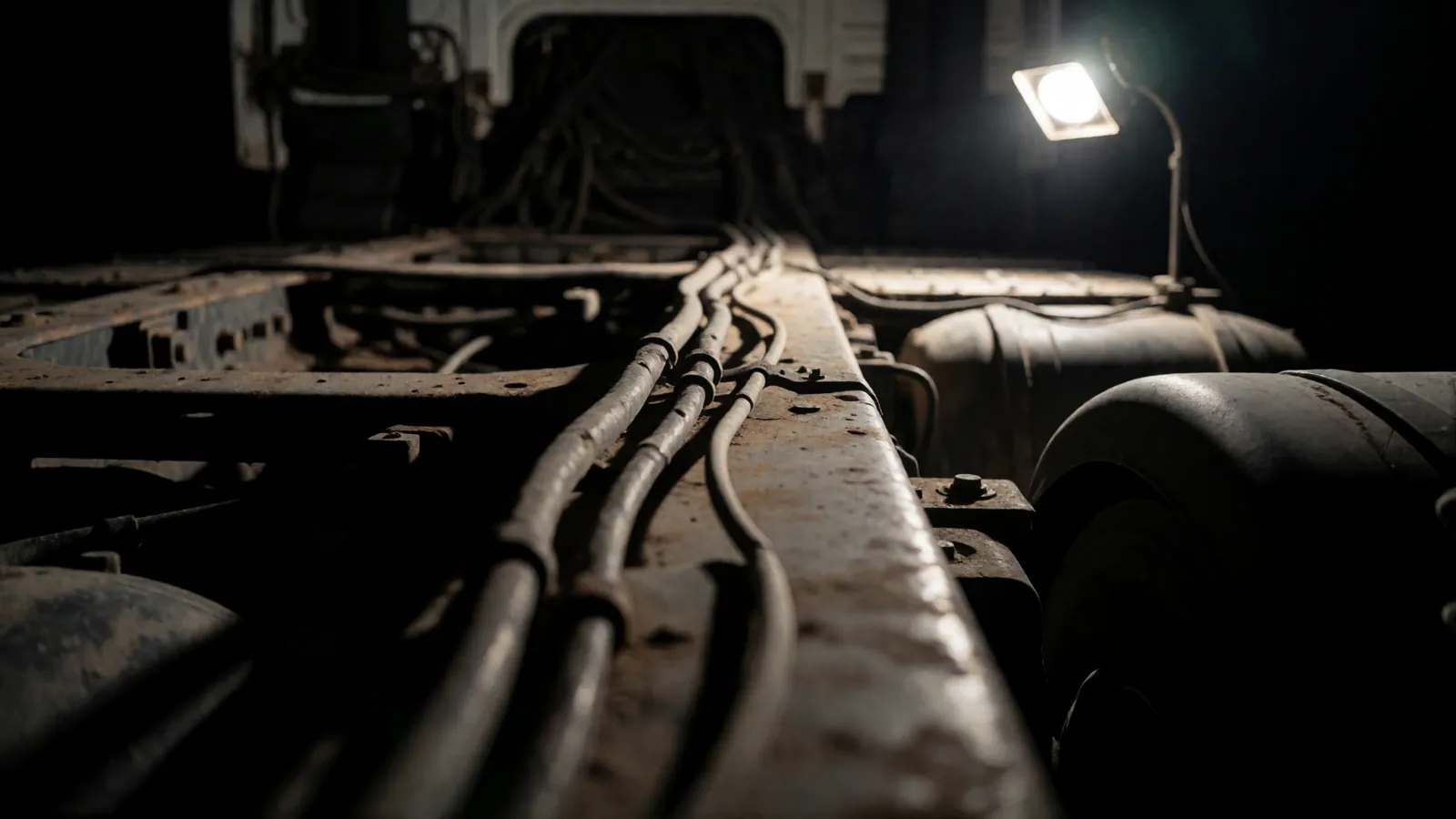
Truck and commercial electrics

Twenty-four volt starting and charging, trailer wiring and ABS, body and PTO controls, and the lighting that has to work before it moves.

  • three jobs on the rate card
  • Labour from $185
  • one to six hours

“It is off the road and every day it sits is costing me.”

On a truck the fault is rarely the interesting part. The cost is the standing still, which is why almost all of this work happens in the yard and why the first hour is spent separating what stops it moving from what can wait until Thursday.

Twenty-four volt systems have their own failure mode and it catches almost everybody: two batteries in series are not one big battery. They age at different rates, and if anything on the vehicle takes twelve volts off the midpoint — and on most trucks something does — one of the pair is worked harder than the other for its whole life. That is why the pair fails early, and why replacing one of them makes it worse rather than better. Trailer faults are a different pattern: the great majority of them are in the connector and the last three feet of cable behind it, and testing the coupling under load in both directions separates a trailer fault from a tractor-unit fault in about fifteen minutes, which is usually the end of an argument between two people who each think it is the other's. Body wiring is the third category and the least documented: tippers, cranes, PTO interlocks, beacons and refrigeration supplies are added by several people over several years, and the truck's own diagram does not show any of it.

What would actually be measured

In roughly this order, and none of it names a part

  • Each battery of the pair tested on its own before the pair is tested together
  • Where the twelve-volt load comes off, and what that has been doing to the batteries
  • Charging output under load with the engine at working speed, not at idle
  • The trailer coupling tested under a real load on every pin, in both directions
  • Grounds on the chassis, which salt and paint make into the commonest fault on a working truck
  • What the body builder added, traced and drawn, because usually nobody ever wrote it down

The jobs

What you can buy, and what the labour costs

Hours are chargeable hours. The figure is the published rate for where the work happens multiplied by those hours, and there is nothing else in it — parts are separate and are at cost plus 20 per cent with both numbers on the invoice.

Truck and commercial electrics. Hours are chargeable hours. The figure is the published rate for where the work happens, multiplied by the hours, and there is nothing else in it — parts are separate and are at cost plus 20 per cent with both numbers on the invoice.
JobHoursWhereLabour
24-volt starting and charging diagnosis one to three hours on site $185 to $555
Trailer wiring and ABS fault tracing one to four hours on site $185 to $740
Body, PTO and auxiliary control faults two to six hours on site $370 to $1,110

24-volt starting and charging diagnosis

$185 to $555

Two batteries in series, one alternator, and a twelve-volt tap that quietly ruins the pair. Tested as a system, in the yard, before it goes anywhere.

  • one to three hours, turnaround same day
  • on-site hour, $185, on site

The first hour: Each battery tested on its own, then the pair under crank. A matched pair that reads fine together can be one good battery carrying one bad one.

What you are left holding: The measured condition of each battery separately, the charging output, and where the twelve-volt load is coming off.

Trailer wiring and ABS fault tracing

$185 to $740

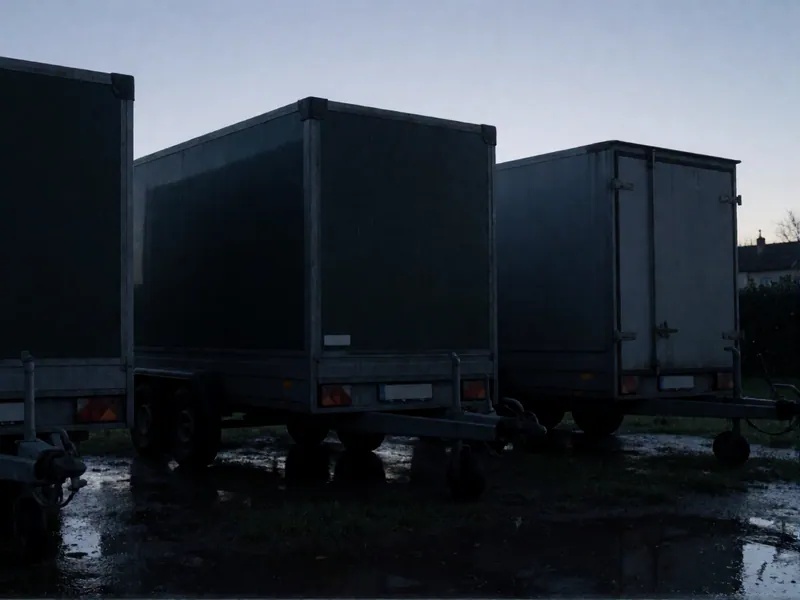
The lamp that will not go out, the trailer that only works on one unit, and the connector that has been full of salt since February.

  • one to four hours, turnaround same day
  • on-site hour, $185, on site

The first hour: Testing the coupling under load in both directions, which separates a trailer fault from a tractor-unit fault in about fifteen minutes and stops the argument.

What you are left holding: A written note of what was measured at the plug, at the socket and at the sensor, and what was repaired.

Body, PTO and auxiliary control faults

$370 to $1,110

Tipper and crane interlocks, PTO engagement, beacons and work lighting, refrigeration supplies, and everything the body builder added after the chassis left the factory.

  • two to six hours, turnaround one to three days
  • on-site hour, $185, on site

The first hour: Finding out what is actually fitted. Body wiring is added by several people over several years and the truck's own diagram does not show any of it.

What you are left holding: The fault traced and repaired, and a drawing of the body wiring as it now is — which on most trucks is the only one that exists.

How that figure is arrived at

  • On-site hour× one$185
  • The same rate, at the long end× three$555
  • Parts, if any are neededcost + 20%separate
  • Labour for this jobone to three hours$185 to $555

The on-site hour is $185 and it is on the rates page. That multiplication is the whole of the labour charge: no callout fee on top of it, no shop supplies percentage and no environmental levy. It is the cost of the work — it is not a quotation for a vehicle nobody has seen.

Where this stops

What this is not

We are not a truck garage. Air systems, brakes, driveline and hydraulics are not ours, and where an electrical symptom turns out to have a mechanical cause we write down what we measured and it goes back to your own workshop with that note.

Everything we do not do, and who we send you to

A closed workshop roller shutter in flat daylight

A worked example

The yard that kept flattening batteries over a weekend

Haulage, general freight · Nine tractor units, one yard

Three units in nine would not start on a Monday. Batteries had been replaced across the fleet twice in eighteen months and the supplier was being blamed.

What we did: A drain test on two of the affected units and one that was fine, each left overnight so the modules settled. Six hours over three visits.

The whole example

Every case study on this site is an illustrative composite assembled from several jobs. No customer is named, no vehicle is identifiable, and there is not a single testimonial on this website attributed to a person — a fabricated one would be the one genuinely dishonest thing a workshop's website can do.

Haulage, general freight

Worth reading first

The good reading that hides a bad circuit

A connection can read twelve and a half volts with a meter on it and still be the reason nothing works. Voltage drop testing takes twenty minutes, finds it, and is skipped almost everywhere.

Questions

What does it cost to find out what is wrong?

One hour, charged at the rate for where it happens: $145 in the workshop, $185 on site, $125 on the bench for a control unit. That hour is measurement rather than guessing, and at the end of it you get what was measured and what it would cost to put right, in writing. If the fix takes under fifteen minutes it happens inside the hour and there is nothing more to pay.

Do you come out, or does it have to come to you?

Trucks and machinery are almost always seen where they stand. Cars and vans are usually quicker and cheaper here, because the equipment does not have to be carried to them. Bench work on a control unit only happens at Hatfield Lane.

How far do you travel?

Twenty-five miles from Goshen carries no travel charge. Beyond that the road time is charged at the workshop rate rather than the on-site rate, which is the cheaper of the two honest ways to do it. The service area page lists the towns we reach before nine o'clock.

Do you guarantee the work?

Any repair we made that fails within thirty days is looked at again without another diagnostic charge. That covers what we did. It is not a warranty on the rest of the vehicle, and a workshop that offers one of those is offering something it cannot pay for.

Truck and commercial electrics · labour from $185

Describe the symptom, or telephone

The symptom check takes about three minutes and gives you a written summary of which circuits would be tested first and why, with the hours and the published rate against each. It is an indicative scope and not a diagnosis — nobody has seen the vehicle — but it is a better opening than a blank contact form. If you would rather skip it, the telephone works.