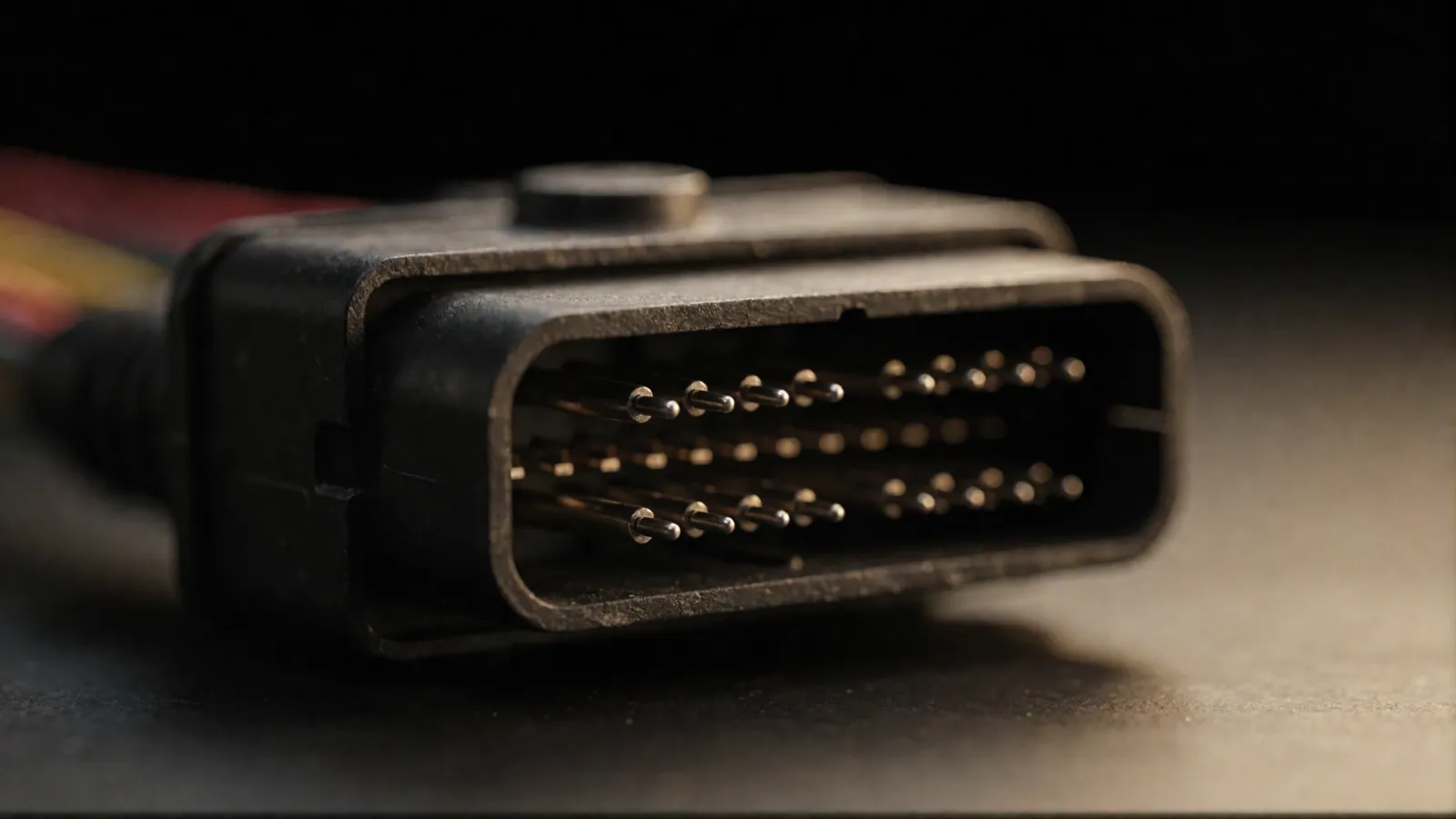
The fault that three garages could not find: measured on the circuit rather than guessed at from a code, and written down when it is found.
five jobs on the rate card
Labour from $145
one to six hours
“Nobody can work out what is wrong with it.”
This is the page the business is built on, and the sentence people say on the telephone is almost always the same one: three places have looked at it and nobody can find it. That is not usually because the other shops were careless. It is because reading a fault code and diagnosing a circuit are two different activities, and only one of them is quick.
A stored code names a circuit and a symptom. It says the signal on this line was outside the range the software expected — it does not say why, and it has never named a part. The difference matters because the same code is produced by a failed sensor, by a sensor whose supply voltage is sagging, by a broken ground, by a chafed wire touching another one, and by a control unit that is not reading it correctly. Those are five different repairs at five different prices, and the only thing that separates them is measurement: voltage drop under load along the feed and the ground, live data while the fault is actually happening, and a scope on the signal itself, because a sensor reading nonsense and a sensor being fed badly look identical in the data and nothing alike on a trace.
What would actually be measured
In roughly this order, and none of it names a part
The symptom reproduced, before anything else, because a fault nobody has seen cannot be tested
Stored codes and freeze-frame data read and written down — as evidence of where to look, not as an answer
The supplies and the grounds of whatever the code points at, measured under load at the connector
Voltage drop along the whole path rather than a static reading at each end of it
A scope on the signals the live data disagrees with, while the engine is doing the thing it does
Where the harness runs, what it touches, and what moves when the vehicle does
The jobs
What you can buy, and what the labour costs
Hours are chargeable hours. The figure is the published rate for where the work
happens multiplied by those hours, and there is nothing else in it — parts are separate
and are at cost plus 20 per cent with both numbers on the invoice.
Electrical fault diagnosis. Hours are chargeable hours. The figure is the published rate for where the work happens, multiplied by the hours, and there is nothing else in it — parts are separate and are at cost plus 20 per cent with both numbers on the invoice. Where a job can be done in the workshop or on site, its figure is the workshop one. Done where the vehicle stands rather than here, the same hours are at the on-site hour, $185.
Job
Hours
Where
Labour
Electrical fault diagnosis
one to three hours
workshop
$145 to $435
Starting circuit diagnosis
one to two hours
workshop or on site
$145 to $290
Running-fault circuit diagnosis
two to four hours
workshop
$290 to $580
Intermittent fault investigation
two to six hours
workshop
$290 to $870
CAN and LIN network diagnosis
two to five hours
workshop
$290 to $725
Electrical fault diagnosis
$145 to $435
The standard piece of work and the one most jobs start as. One hour to establish what the circuit is actually doing, and a decision at the end of it about whether to carry on.
one to three hours, turnaround same day
workshop hour, $145, workshop
The first hour: Confirm the symptom happens, read the stored codes and the freeze-frame data without believing either of them, then measure the supplies and the grounds of whatever the code is pointing at.
What you are left holding: A written note of what was measured, at which point in the circuit, and what the next test would be. If the fault is found inside the hour, that note says so and the job stops there.
Starting circuit diagnosis
$145 to $290
It will not turn over. Four components and about nine connections can each produce that, and they are separated by measurement rather than by replacement.
one to two hours, turnaround same day
workshop hour, $145, here — or the on-site hour, $185, where it stands
The first hour: State of charge and a load test on the battery, then a voltage drop test along the main feed and the earth path while somebody holds the key.
What you are left holding: A written note of the voltage drop measured on the feed and on the ground under crank, and which side of the circuit the loss is on.
Running-fault circuit diagnosis
$290 to $580
It starts and dies, cuts out, or runs badly with a light on. The sensor and actuator circuits are looked at with a scope while the engine is doing the thing it does.
two to four hours, turnaround one to two days
workshop hour, $145, workshop
The first hour: Live data at idle and under load, then a scope on the signals the data disagrees with. A sensor reading nonsense and a sensor whose supply is sagging look identical in the data and nothing alike on a trace.
What you are left holding: The captured traces, a written note of which signal was wrong and in what way, and what that narrows the cause to.
Intermittent fault investigation
$290 to $870
The fault that will not happen while anybody is watching. Charged differently because it is a different job: the work is provoking it, catching it, and being set up in advance to record the moment it arrives.
two to six hours, turnaround two to five days
workshop hour, $145, workshop
The first hour: Agreeing what the trigger seems to be — heat, vibration, water, load — and instrumenting the circuit so the next occurrence is recorded rather than missed.
What you are left holding: A recorded capture of the fault occurring, the conditions that produced it, and the measurement taken at that moment.
CAN and LIN network diagnosis
$290 to $725
Several warning lights at once, modules that will not answer, or a diagnostic tool that cannot reach half the vehicle. That is usually one fault, not a dozen.
two to five hours, turnaround one to three days
workshop hour, $145, workshop
The first hour: Termination measured across the pair with everything off, then each line watched on a scope to see whether it is being pulled down, shorted together, or simply not driven by anybody.
What you are left holding: A written note of the network's termination resistance, the state of each line, and which branch the fault is on.
How that figure is arrived at
Workshop hour× one$145
The same rate, at the long end× three$435
Parts, if any are neededcost + 20%separate
Labour for this jobone to three hours$145 to $435
The workshop hour is $145 and it is on the rates page. That multiplication is the whole of the labour charge: no callout fee on top of it, no shop supplies percentage and no environmental levy. It is the cost of the work — it is not a quotation for a vehicle nobody has seen.
Where this stops
What this is not
Diagnosis is not a guaranteed answer inside an hour. Some faults are found in twenty minutes and some need a recorder left on the vehicle for a week. If the first hour ends without an answer, you are told that rather than sold a second one, and you can take what has been measured so far anywhere you like.
Arable farm, about nine hundred acres · One combine, two tractors, harvest under way
The machine cut out at random and restarted after ten minutes. It had been to a dealer twice in the winter, and both visits ended with codes cleared and nothing found. It only ever did it with the header full and the machine working hard.
What we did: Instrumented rather than inspected: a recorder left on the supply and the ground of the circuit the stored codes pointed at, and the machine sent back out. Four hours over two evenings.
Every case study on this site is an illustrative composite assembled from several jobs. No customer is named, no vehicle is identifiable, and there is not a single testimonial on this website attributed to a person — a fabricated one would be the one genuinely dishonest thing a workshop's website can do.
Worth reading first
A fault code is not a diagnosis
The code names a circuit and a symptom. It has never named a part, and the difference between those two things is most of what an auto electrician is for.
One hour, charged at the rate for where it happens: $145 in the workshop, $185 on site, $125 on the bench for a control unit. That hour is measurement rather than guessing, and at the end of it you get what was measured and what it would cost to put right, in writing. If the fix takes under fifteen minutes it happens inside the hour and there is nothing more to pay.
Can you tell me what is wrong over the telephone?
No, and neither can anybody else. We can tell you whether it sounds like a workshop job or a callout, roughly how long the first hour usually takes on that sort of fault, and occasionally that it is something you can check yourself in five minutes. Naming a part down a telephone is guessing with a confident voice.
What if you cannot find it?
You are told that at the end of the hour rather than sold a second one. Some faults need a recorder left on the vehicle and several days of it happening again, and that is a different job with a different price, which you decide to buy or not.
Can you turn off a warning light?
We can clear a code once the reason it was set has been found and fixed. Clearing one to make a light go out is deleting the evidence, and the light comes back — usually on the way home.
Electrical fault diagnosis · labour from $145
Describe the symptom, or telephone
The symptom check takes about three minutes and gives you a written summary of which circuits would be tested first and why, with the hours and the published rate against each. It is an indicative scope and not a diagnosis — nobody has seen the vehicle — but it is a better opening than a blank contact form. If you would rather skip it, the telephone works.