29 July 2026 · about twelve minutes
Repair or replace: what actually happens inside a control unit
Most shops replace a module because opening one is a different trade. What is inside, which failures are repairable, which are not, and why a repaired unit keeps the programming a replacement would need.
A control unit fails. The workshop quotes several hundred dollars for a replacement plus programming, and on an older machine sometimes reports that there is no replacement to be had at any price. Both of those are frequently true and neither is the end of the conversation, because there is a third option that most of the trade does not offer.
First: it may not be the module
This is the most important paragraph on the page. A control unit that appears dead is very often a control unit that is not being fed. Before anything is condemned, every supply and every ground reaching it should be measured AT ITS OWN CONNECTOR — not at the battery, not at the fuse box, at the plug that goes into it.
A large share of the modules sent away for repair are innocent, and the workshop that sent them has bought a delay rather than an answer. It costs twenty minutes to find out.
What is inside one
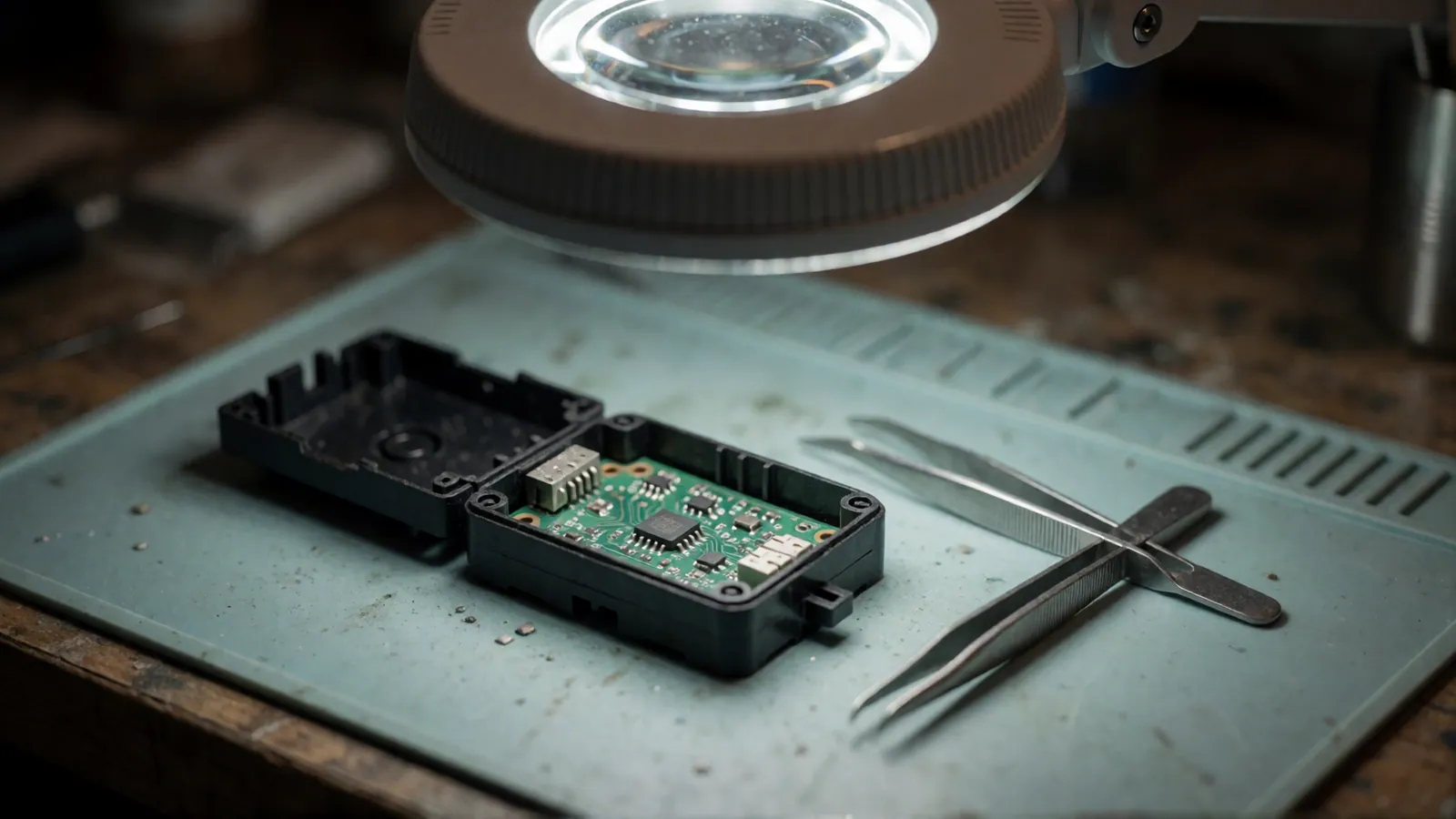
Less mystery than the price suggests. A power supply section that turns the vehicle's messy twelve or twenty-four volts into the clean low voltages the electronics need. Input circuits that condition the signals coming in from sensors. Output drivers — usually power transistors — that switch the things the module controls. A processor with the software in it. And a connector header where all of that meets the outside world.
They fail overwhelmingly at the ends of that list rather than in the middle.
What is repairable
- Cracked solder joints. A heavy component shaken for a decade eventually breaks the joint holding it. Extremely common on machinery, and visible under a microscope.
- Corrosion. Water tracks down inside a harness and comes out at the connector. If it is caught before the tracks are eaten through, the board cleans back and repairs.
- Failed power supply stages. A regulator that has gone down takes the whole unit with it and is a replaceable component.
- Failed output drivers. The commonest electrical failure of all, because they do the actual work and carry the actual current.
- Swollen or dried electrolytic capacitors. A wear item with a temperature-dependent life, and cheap.
- Damaged header pins. Bent, corroded or pushed back, and repairable if the tracks behind them survived.
What is not
- A failed processor whose firmware nobody can supply. The hardware could be replaced; the software that makes it your vehicle's module cannot.
- A multilayer board with physical damage through it, where the broken connections are inside the board rather than on its surface.
- A fully potted unit, where the electronics are set in a solid block of compound. Getting it out destroys it.
- Anything where the repair costs more than the alternative, which is a real answer and is given in writing.
The advantage nobody mentions
A repaired unit keeps the programming it already has. That sounds administrative and it is frequently the whole reason to do it: a replacement unit has to be coded to the vehicle, and on an older machine that can mean a manufacturer's online system, a franchised workshop with an account for that make, and occasionally a piece of infrastructure that no longer exists for a machine of that age.
On a fourteen-year-old self-propelled machine, "we can repair the one you have" is not a saving of a few hundred dollars. It is the difference between the machine working and the machine being parked.
What it costs to find out
One bench hour to open it, establish whether it is repairable and say so, with photographs. It comes off the repair if you go ahead and it is all you pay if the answer is no. Three answers are possible and one of them is no.
What this article cannot tell you
Whether your unit is faulty at all. That is the first paragraph again, and it is first for a reason: the measurement that answers it happens on the vehicle, before anything comes off it.
Nothing on this website names a fault on your vehicle. Not the intake, not the articles and not the telephone. A fault named from a description is a guess, and the whole argument for this trade is that a measurement is not a guess.
More of the same
The other three
A fault code is not a diagnosis
The code names a circuit and a symptom. It has never named a part, and the difference between those two things is most of what an auto electrician is for.
18 March 2026 · about nine minutes to read

Why the battery is flat on Monday morning
A vehicle that starts all week and not on Monday is being emptied rather than not being filled. Here is how a parasitic drain is actually measured, and why pulling fuses to find one does not work.
22 April 2026 · about ten minutes to read
The good reading that hides a bad circuit
A connection can read twelve and a half volts with a meter on it and still be the reason nothing works. Voltage drop testing takes twenty minutes, finds it, and is skipped almost everywhere.
27 May 2026 · about eight minutes to read
$145 a workshop hour · $185 on site · agreed before it starts
Describe the symptom, or just telephone
The symptom check takes about three minutes and gives you a written summary of which circuits would be tested first and why, with the hours and the published rate against each. It is an indicative scope and not a diagnosis — nobody has seen the vehicle — but it is a better opening than a blank contact form. If you would rather skip it, the telephone works.