$145 a workshop hour 000-000-0000

Goshen, NY · since 2009

The electrical fault the garage could not find.

Woodside Auto & Ag Electric is a five-person auto electrical specialist working on cars, trucks and agricultural machinery across Orange County, the Hudson Valley and the Route 17 corridor. A fault code names a circuit, not a part — so the first hour here goes on measurement rather than on replacing something and hoping. We are not a garage, and we do not go inside the traction system of an electric or hybrid vehicle; there is a page that says exactly where that line sits.

  • One diagnostic hour, agreed before it starts
  • Under fifteen minutes to fix means it happens inside that hour
  • Component-level repair of the units most shops only replace
$145
a workshop hour, published, before you telephone
seven
things we work on, and a long list we do not
26
jobs on the rate card, each an hourly rate times hours
eight
kinds of work we refuse, named on one page

What people actually say on the telephone

Nobody rings an auto electrician asking for a voltage drop test

They ring because something has stopped working and the last three people who looked at it fitted a part. These are the seven sentences we hear, and what each one usually turns out to be a question about.

“Nobody can work out what is wrong with it.”

A fault code names a circuit and a symptom. It does not name a part, and a shop that replaces the part in the code description is buying a lottery ticket with your money. The work here is a voltage drop test under load, a scope on the signal, a look at the live data while the fault is happening, and a written note of what was measured and where.
Electrical fault diagnosis

“It is on its second new battery and it is still going flat.”

A battery, a starter, an alternator and the cables between them are one circuit, and a fault in any of them looks like a fault in the others. The test that separates them is voltage drop under load, which takes twenty minutes and is skipped almost everywhere. Parasitic drain is the slower one and it needs the vehicle to sit until the modules go to sleep.

Starting and charging

“It comes and goes over bumps and nobody can catch it.”

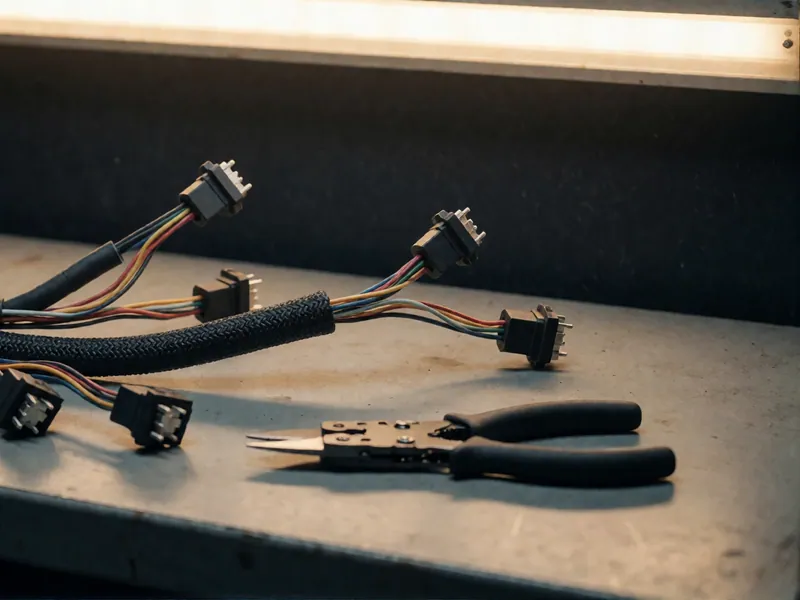
Most intermittent electrical faults are mechanical: a conductor that is broken inside its insulation, a pin that has backed out of its housing, a ground strap with green under it. Repairs here are soldered and sealed or crimped with the right tool and heatshrunk, the loom is re-supported where it rubbed, and the reason it rubbed gets fixed too.

Wiring, looms and connectors

“The dealer says the module is not available any more.”

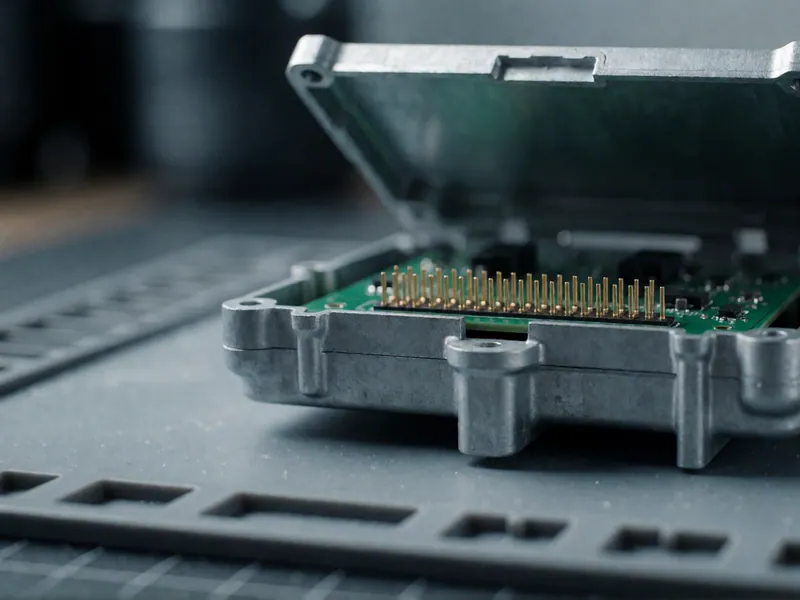
Before anything is opened, the supplies and the grounds that reach the unit are measured, because a module that looks dead is very often a module that is not being fed. If the unit is genuinely at fault, a large share of them fail in a small number of ways: cracked solder joints, corrosion where water tracked down the harness, a failed regulator or driver stage, swollen capacitors. Those are repairable. Some things are not, and this page says which.

Control modules and board-level repair

“It is off the road and every day it sits is costing me.”

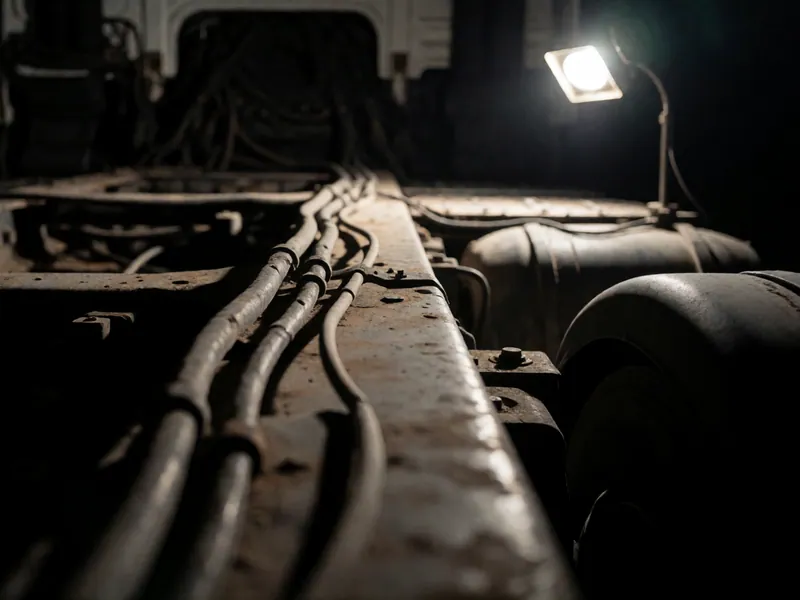
Two batteries in series is not one big battery: they age at different rates, and a truck with a twelve-volt tap loads them unevenly, which is why the pair fails early and why replacing one of them makes it worse. Trailer faults are mostly the connector and the last three feet of cable behind it. Downtime is the whole cost here, so most of this work is done in the yard.

Truck and commercial electrics

“It stopped in the middle of a field and the weather is turning.”

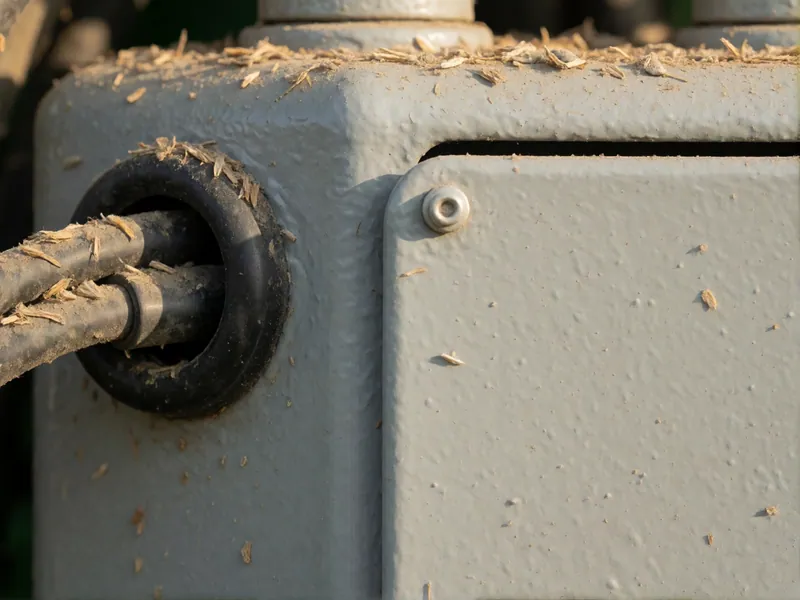
Agricultural electrics fail for three reasons and they are all environmental: vibration breaks conductors inside insulation, dust and chaff hold moisture against connectors, and machines that stand for nine months attract rodents. All three are predictable, which is the argument for looking at a machine in February rather than in August.

Agricultural machinery

“We had a camera fitted and now the dash lights up at random.”

Most of the intermittent faults on this list started as somebody else's installation. An accessory taken off a communication line, an unfused feed, a ground on a painted panel or a supply that never sleeps will each produce a fault that looks like a fault in the vehicle. Work fitted here is fused at the source, taken from a supply that is meant to carry it, and drawn on a sheet that goes in the folder.

Auxiliary installations

seven service areas, 26 jobs

What we do, and what the labour on each piece of it costs

Every job below is a fixed shape: a number of chargeable hours, at one of four published rates, ending in something written. The shortest is one hour and the longest runs to sixteen hours. Parts are separate, at cost plus 20 per cent, with both numbers on the invoice.

Starting and charging

Starting and charging

from $145

  • 3 jobs on the rate card
  • one to six hours

Why it will not turn over, why the battery is flat on Monday, and which of the four things in that circuit is actually at fault.

It is on its second new battery and it is still going flat.

Starting and charging in detail

Agricultural machinery

Agricultural machinery

from $265

  • 3 jobs on the rate card
  • one to six hours

Tractors, combines, balers and sprayers: monitors, sensors, guidance wiring, and the harness that has spent its life in dust, chaff and vibration.

It stopped in the middle of a field and the weather is turning.

Agricultural machinery in detail

Auxiliary installations

Auxiliary installations

from $145

  • 5 jobs on the rate card
  • one to eight hours

Cameras, work lighting, beacons, trackers, inverters and fridges — fused properly, taken from the right supply, and not spliced into the first wire that had power on it.

We had a camera fitted and now the dash lights up at random.

Auxiliary installations in detail

The symptom check

Three minutes, ten questions, and a list of what would be tested first

It asks what the vehicle actually does rather than what you think it means: what happens when you turn the key, whether there is a pattern to it, when it started, what has already been replaced. Two of the questions change depending on your earlier answers, because a combine standing in a field and a car on a driveway are not having the same conversation. At the end it names two or three circuits your answers point at and says what would be measured on each — and it never names a fault, because nothing that has not seen the vehicle can.

Nothing leaves your browser until you press send

The answers live in this browser while you fill it in, and the summary is worked out on your own machine. The only thing ever transmitted is what you choose to send at the end.

It never names a fault

Every result is a list of what would be MEASURED and in what order. A fault named from ten answers is a diagnosis from a questionnaire, and that is the thing this workshop exists to argue against.

It is a scope, not a quotation

What it prints is the published hourly rate multiplied by a range of hours for a named piece of work. Never a single figure, which would read as a price for a repair nobody has seen.

The pricing model, in public

Four hourly rates. Every figure on this site is one of them times a number of hours.

Almost no workshop publishes one, and the reason is not modesty: a price arrived at after the shop has heard how stuck you are is a price arrived at from how stuck you are. In this trade that matters more than most, because a machine standing in a cut field is not going anywhere for a second opinion.

On-site hour

$185an hour

An hour where the equipment travelled. Trucks and machinery are seen where they stand, and travel inside twenty-five miles of Goshen is in this rate rather than added to it.

  • The diagnostic hour is agreed before it starts
  • Under fifteen minutes to fix means it happens inside that hour
  • Parts at cost plus 20 per cent, both figures on the invoice
  • Thirty days on any repair we made

Bench hour

$125an hour

Electronics work under a microscope, on a control unit that came off the vehicle. The cheapest of the four, because nothing had to move and because the alternative is usually buying a new unit.

  • The diagnostic hour is agreed before it starts
  • Under fifteen minutes to fix means it happens inside that hour
  • Parts at cost plus 20 per cent, both figures on the invoice
  • Thirty days on any repair we made

After-hours on-site hour

$265an hour

Evenings and weekends in harvest, for machinery standing in a field. Published rather than negotiated at the gate at nine at night, which is the only honest way to have this rate.

  • The diagnostic hour is agreed before it starts
  • Under fifteen minutes to fix means it happens inside that hour
  • Parts at cost plus 20 per cent, both figures on the invoice
  • Thirty days on any repair we made

The one most shops do not offer

A control unit repaired rather than replaced

A dealer says the module is not available any more. That is frequently true and it is rarely the end of it: most control units fail in a small number of ways — cracked solder joints, corrosion where water tracked down the harness, a failed regulator or output driver, swollen capacitors — and all of those are repairable on a bench. The repaired unit also keeps the programming it already has, which on an older machine is not a saving, it is the difference between working and parked.

One bench hour opens it and answers three ways: repairable, repairable but not economic, or not repairable, with the reason and photographs. It comes off the repair if you go ahead.

How that figure is arrived at

  • Bench hour× two$250
  • The same rate, at the long end× six$750
  • Parts, if any are neededcost + 20%separate
  • Labour for this jobtwo to six hours$250 to $750

The bench hour is $125 and it is on the rates page. That multiplication is the whole of the labour charge: no callout fee on top of it, no shop supplies percentage and no environmental levy. It is the cost of the work — it is not a quotation for a vehicle nobody has seen.

Control modules and board repair, in detail

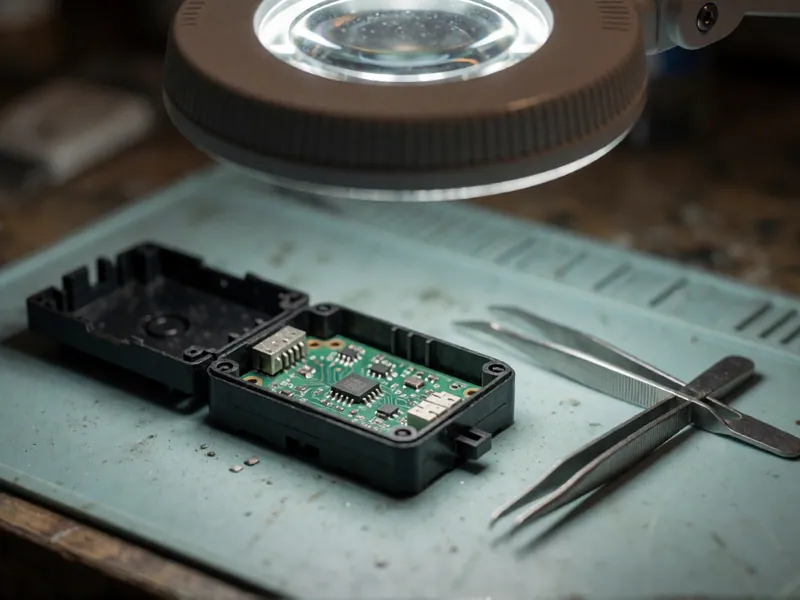
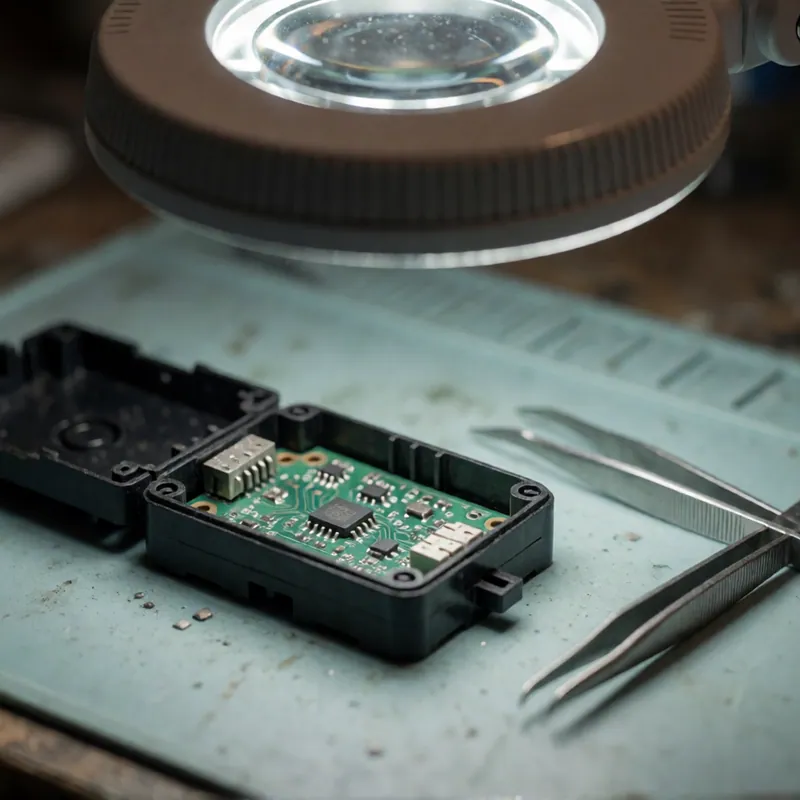
An opened control unit under a magnifier lamp on a workshop bench

How it runs

Five stages, the same every time

  1. A telephone call

    Ten minutes

    What it is, what it does, when it started and whether it moves. Enough to say whether it comes here or we come to it, and roughly what the first hour will cost. If it is obviously somebody else's job we say so on the call.

  2. The diagnostic hour

    One hour, charged

    The rate for where it happens, published on the rates page. The hour is measurement, not guessing: supplies, grounds, voltage drop under load, and a scope on anything that is not behaving. If the fix takes under fifteen minutes it happens inside the hour.

  3. What we found, in writing

    Same day

    What was measured, where, and what it means. Then the cost to put it right: the hours, the rate, the parts at cost plus the published percentage. You can take that away and have somebody else do the work, and some people do.

  4. The repair

    Same day to ten days

    Soldered and sealed or crimped with the right tool, supported where it rubbed, and photographed before it is wrapped up. If it turns out to be worse than the note said, work stops and you get a telephone call, not a bigger invoice.

  5. Afterwards

    Thirty days

    Photographs of what was done and a drawing of anything that was added, so the next person is not starting from nothing. Any repair we made that fails within thirty days is looked at again without another diagnostic charge.

The strongest page on this website

What we do not do, and who we send you to

Vehicle electrical work is not a licensed trade, so nobody here can claim a qualification they have not earned. The risk runs the other way: drifting into work that belongs to somebody else, or — in two cases — into work that is against the law. These are the eight things we will not do and who is on the other side of each.

We do not work inside the high-voltage traction system of an electric or hybrid vehicle.

A traction pack runs at several hundred volts and it is a different trade: its own qualification, its own insulating equipment and its own isolation procedure, none of which is improvised. The auxiliary and control electrics on the same vehicle are ordinary twelve-volt work and we do them — the twelve-volt battery, the lighting, the body modules, the accessory circuits. Anything on the orange cable, the pack, the inverter or the traction motor is not ours, and it does not become ours because a job turns out to be next to one.

  • We do: Everything on the low-voltage side of the same vehicle.
  • Who does the rest: A workshop with high-voltage qualified technicians, or the vehicle's own dealer network.

We are not a garage. We do not do mechanical repair, hydraulics, brakes, bodywork or glass.

Electrical diagnosis is a full-time skill and the reason to have a specialist do it is that they are not also trying to be a general workshop that afternoon. We will tell you when a fault has turned out to be mechanical — a seized component drawing too much current is an electrical symptom with a mechanical cause — and then it goes back to your garage with a written note of what we measured.

  • We do: Say what the electrical evidence shows, so the mechanical work starts from a fact.
  • Who does the rest: Your own garage, or the dealer for machinery under warranty.

We do not alter a recorded odometer reading, for any reason and at any price.

Changing a mileage record is a federal offence and it is not a service anybody offers honestly. There is a narrow, documented case where an instrument cluster is replaced and the reading has to be set and disclosed on a sticker, and that is done by the people who supply the cluster, with the paperwork. It is not what people mean when they telephone about this.

  • We do: Repair the cluster's electronics, which does not change what it has recorded.
  • Who does the rest: Nobody. If somebody offers, that is the answer to your question about them.

We do not fit, supply, wire or program anything whose purpose is to defeat an emissions control system, and we do not remove one.

It is against federal law, it is against the law in this state, and it is the fastest way for a workshop and its customer to acquire a problem much larger than a warning light. If a vehicle arrives with something like that already fitted, we will say what we have found and we will not work around it.

  • We do: Diagnose the sensor and heater circuits that make an emissions system report a fault.
  • Who does the rest: Nobody, and a supplier who tells you otherwise is selling you their risk.

We do not do immobiliser, key or security-system work without documented proof that the vehicle is yours.

Title or registration in your name, and identification that matches it. This is not a formality and it is not negotiable: the whole value of a security system is that it cannot be got round by somebody plausible with a story about lost keys. It is also, plainly, how a workshop stays out of a theft investigation.

  • We do: Repair the wiring and the modules involved, once ownership is shown.
  • Who does the rest: With the paperwork, us, or a locksmith who works on vehicles.

We do not supply, refit or reset deployed restraint components, and we do not clear a restraint system fault we have not traced.

Airbags, pretensioners and their control units are safety-critical and the fault codes they store are not decoration. We will trace and repair wiring faults in those circuits, following the disable procedure, and we will say when a component itself has to be replaced by somebody who does that work.

  • We do: Trace and repair the wiring, with the system correctly disabled.
  • Who does the rest: A collision repair shop, or the vehicle's dealer.

We do not have manufacturer programming access for every make, and we say which before you leave the vehicle.

Some control units can only be coded to a vehicle through the manufacturer's own online system by a workshop with an account for that make. Repairing a board avoids that problem entirely, because a repaired unit keeps the programming it already has — which is most of the argument for repairing rather than replacing. Where a job genuinely needs dealer programming, we will tell you at the start rather than at the end.

  • We do: Repair the unit so that the programming question does not arise.
  • Who does the rest: A franchised dealer for that make.

We are not a New York State inspection station and we do not issue inspections.

That is a licensed activity with its own premises requirements, and this workshop is not licensed for it. We will happily find out why something is failing an inspection on an electrical item, and then it goes back to the station.

  • We do: Diagnose and repair the electrical fault behind a failure.
  • Who does the rest: A licensed New York State inspection station.

Worked examples

four jobs, each assembled from several

There is not a single customer name, photograph or testimonial anywhere on this website, and that is deliberate rather than modest. A fabricated quotation attributed to a person is the one genuinely dishonest thing a workshop's site can do. Every example below is a composite and says so on its own page.

Every case study on this site is an illustrative composite assembled from several jobs. No customer is named, no vehicle is identifiable, and there is not a single testimonial on this website attributed to a person — a fabricated one would be the one genuinely dishonest thing a workshop's website can do.

The season

The smartest thing on the rate card is bought in February

Agricultural electrics fail for three reasons and all three are environmental: vibration breaks conductors inside insulation that still looks new, dust and chaff hold moisture against connectors until the pins go green, and a machine that stands for nine months in a dry shed is, to a mouse, a heated building full of bedding material.

All three are predictable, which is the whole argument for looking at a machine in the quiet months rather than in August. Three machines or more at one address, checked between January and April, at a fixed price each. Anything found is quoted before it is done, and the report is written so it can be handed to somebody else.

What is actually checked

Machinery is seen where it stands. Trucks and machinery are seen where they stand, because a machine in a field cannot come to a workshop and a truck standing still is losing money by the hour. Cars and vans are usually quicker and cheaper here. Bench work on a control unit only happens at Hatfield Lane.

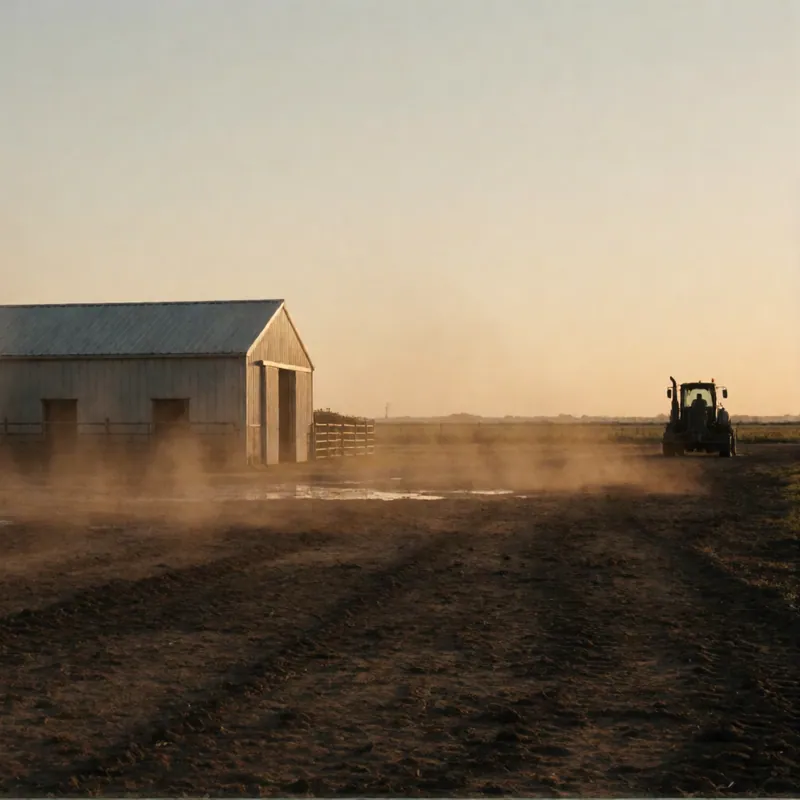
A cut wheat field at golden hour with a distant machine on the skyline

Writing

five pieces worth the twenty minutes

In a trade where a customer cannot tell a specialist from a parts-changer until after the invoice, the writing is the only evidence available before the money. Each of these is meant to be usable on its own, by somebody who never telephones.

Questions

What people ask before they call

What does it cost to find out what is wrong?

One hour, charged at the rate for where it happens: $145 in the workshop, $185 on site, $125 on the bench for a control unit. That hour is measurement rather than guessing, and at the end of it you get what was measured and what it would cost to put right, in writing. If the fix takes under fifteen minutes it happens inside the hour and there is nothing more to pay.

Why do you charge for diagnosis when the garage down the road does not?

Because somebody pays for it either way. A workshop that does not charge for looking has to recover the time in the parts it sells, which is why free diagnosis so often arrives with a part attached to it. The hour is published, and you can take the written result somewhere else.

Can you tell me what is wrong over the telephone?

No, and neither can anybody else. We can tell you whether it sounds like a workshop job or a callout, roughly how long the first hour usually takes on that sort of fault, and occasionally that it is something you can check yourself in five minutes. Naming a part down a telephone is guessing with a confident voice.

The dealer says the module is not available. Is that the end of it?

Often not. A bench assessment is one hour and it answers three ways: repairable, repairable but not worth it, or not repairable — with the reason and photographs. A repaired unit also keeps the programming it already has, which is frequently the part that makes the difference on an older machine.

Do you work on electric and hybrid vehicles?

The twelve-volt side, yes — the battery, the lighting, the body modules, the accessory circuits, all of it ordinary work. We do not go inside the high-voltage traction system: that is several hundred volts and it is a different trade with its own qualification and its own equipment.

Do you come out, or does it have to come to you?

Trucks and machinery are almost always seen where they stand. Cars and vans are usually quicker and cheaper here, because the equipment does not have to be carried to them. Bench work on a control unit only happens at Hatfield Lane.

$145 a workshop hour · $185 on site · agreed before it starts

Describe the symptom, or just telephone

The symptom check takes about three minutes and gives you a written summary of which circuits would be tested first and why, with the hours and the published rate against each. It is an indicative scope and not a diagnosis — nobody has seen the vehicle — but it is a better opening than a blank contact form. If you would rather skip it, the telephone works.